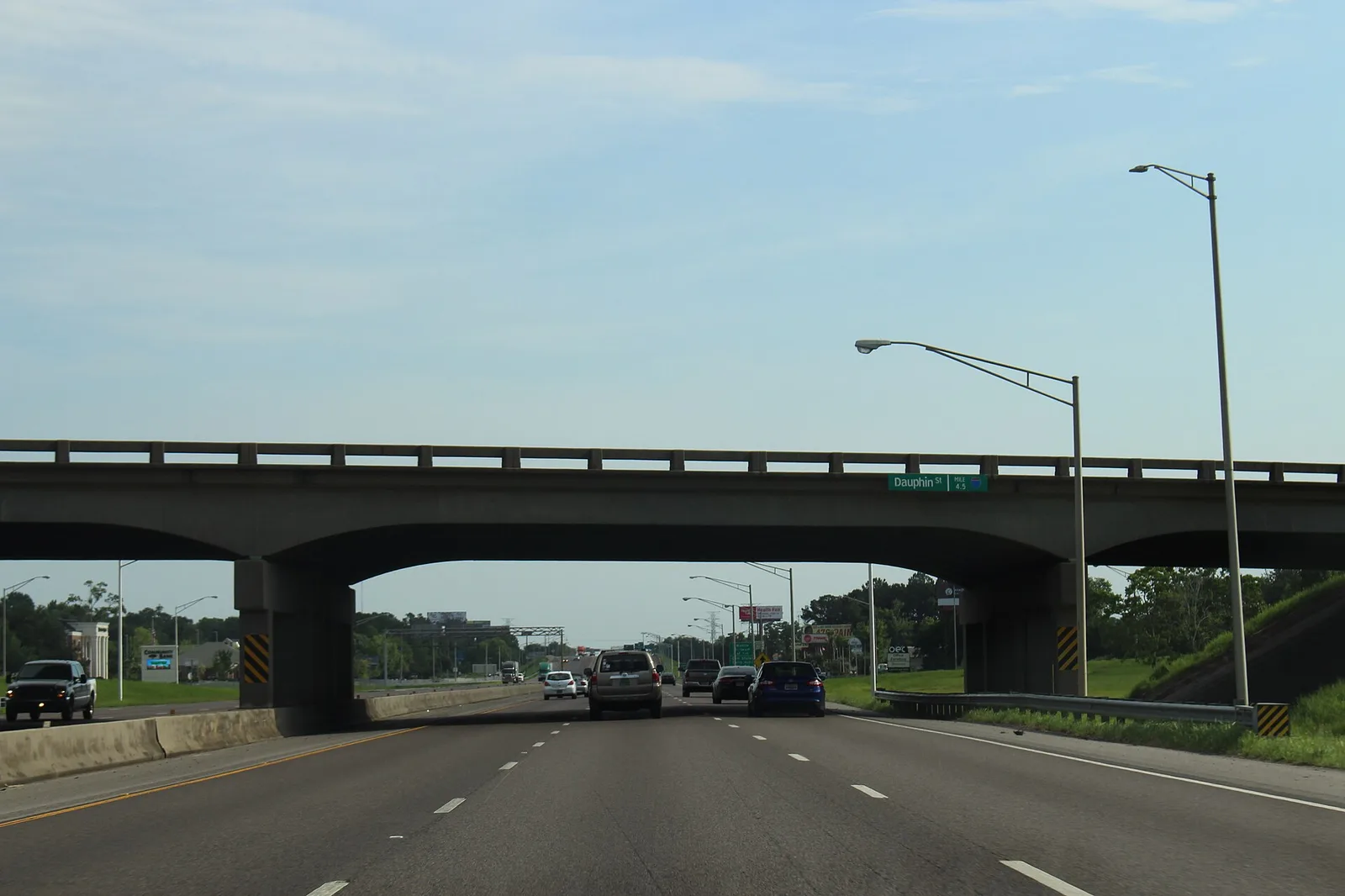
Mobile's council told the mayor Nov. 10 to draft TIF project plans for Midtown, the South Riverfront and Tillman's Corner. It did not set the Dec. 1 hearing.
The Mobile City Council is set to decide Tuesday whether to start the process of creating three tax increment financing (TIF) districts. They would cover the Midtown/I-65 corridor, the riverfront south of downtown and the city’s southwest side along Government Boulevard.
Updated Nov. 12: At the Nov. 10 meeting, the council adopted a new resolution, 50-1223, telling the mayor to prepare draft project plans for the proposed districts. A council member who backed it said the drafts should be complete plans the council can agree on before taking them to the other taxing bodies, and that the call for public hearings “should not move forward.” Another asked that the drafts suggest who would sit on each district’s board. A separate vote to call the Dec. 1 public hearings then did not carry: the city’s video of the meeting shows at least three members voting no. The four held-over resolutions below were laid over for two more weeks, with one member opposed. The minutes, not yet posted, will give the formal tallies. There is no hearing on Dec. 1 unless the council sets one again.
Four resolutions on the agenda for the 10 a.m. Tuesday, Nov. 10, meeting would call a public hearing on the districts. The hearing would be at 10:30 a.m. Tuesday, Dec. 1, in the council chambers at Government Plaza, 205 Government St. The council has held them over since they were first read in October.
There are four resolutions for three districts because the southwest district has two competing versions. One is sponsored by Mayor Spiro Cheriogotis. The other is sponsored by council member Ben Reynolds, who represents District 4. Their boundaries differ.
The three proposed districts
The descriptions below come from the resolutions and draft hearing notices in the Nov. 10 agenda packet.
| District | Sponsor | Area described in the resolution |
|---|---|---|
| District 5, Midtown/I-65 Corridor | Mayor Cheriogotis | East of I-65 from the northern city limits south to Government Boulevard (U.S. 90), reaching east to about Mobile Street, Three Mile Creek, North Florida Street and Carlen Street; plus land west of I-65 from Dauphin Street south to Pleasant Valley Road, bounded by the Spring Hill Golf Course, Montlimar Creek and Downtowner Boulevard |
| District 7, South Riverfront | Mayor Cheriogotis | Land south of downtown on both banks of the Mobile River, along the I-10 corridor, south of Canal Street and west of Broad Street |
| District 3, Tillman’s Corner/Highway 90 | Two versions: Mayor Cheriogotis and council member Reynolds | Government Boulevard (U.S. 90) toward the city limits and land around I-10 at Rangeline Road; the two versions draw the edges differently |
The district takes its name from Tillmans Corner, the unincorporated community about nine miles southwest of downtown. Both resolutions say the district lies inside Mobile’s city limits.
How the two southwest maps differ
Reynolds’ version, resolution 50-1117, was first read Oct. 14. It covers parcels around Government Boulevard and Demetropolis Road, running south along Government Boulevard to the city limits. It also takes in land around the I-10 and Rangeline Road interchange, reaching south toward Theodore Dawes Road and Hamilton Boulevard and east to Rabbit Creek.
The mayor’s version, resolution 50-1118, reaches farther north. It covers:
- Government Boulevard from Montlimar Creek, bounded by Montlimar Creek, Moore’s Creek and I-65
- Government Boulevard from near Azalea Road south to the city limits
- land north and south of Rangeline Road, east from Government Boulevard, with Dog River as the northern edge
- parcels east of Government Boulevard, extending west to Sollie Road
The maps attached to both resolutions are in the agenda packet. The draft notices say a map can also be seen at the City Clerk’s office at Government Plaza during business hours.
What a TIF district does
Alabama’s tax increment law is Chapter 99 of Title 11 of the Code of Alabama. The resolutions do not set any new tax.
When a district is created, the value of all taxable property inside it is fixed as of that day, as equalized by the state Department of Revenue. The law calls that the tax increment base. If values rise later, the property tax collected on the growth above that base is the “tax increment.” It goes into a fund that pays for projects in the district, or for bonds and other borrowing that pay for them.
The law lists what that money can cover. It includes:
- public works and improvements, and new buildings and facilities
- buying, clearing and grading land, and environmental cleanup
- renovating or demolishing buildings, and restoring historic facades
- planning, engineering and legal costs, and interest on the borrowing
Every taxing body that collects property tax on land in a district is a “deferred tax recipient” under the law. Each resolution says a copy of the hearing notice goes to them by first-class mail.
What happens next
If the council adopts the resolutions Tuesday:
- the mayor is authorized to prepare a project plan for each district for the council to review
- notice of the hearing runs in Lagniappe on Nov. 18 and Nov. 25
- the council holds the public hearing at 10:30 a.m. Tuesday, Dec. 1
At the hearing, anyone can speak on three questions set out in each notice: the idea of tax increment financing, the proposed district and its boundaries, and its benefits to the city. The hearing does not itself create a district. Under the law, the council creates one by a later resolution.
The earlier drafts set the hearing for Nov. 17. At the Oct. 27 meeting, council members voted 7-0 to hold all four resolutions over for two more weeks, according to the minutes. The new drafts move the hearing to Dec. 1.
What it means for you
If you own property or a business in any of the three areas, the Dec. 1 hearing is your chance to be heard on whether the district should exist and where its lines should fall. The resolutions set no new tax. If a district is created, property tax collected on growth in values there above the base would go to projects in the district.
The council meets at 10 a.m. Tuesday at Government Plaza. Meetings are open to the public. For more on what you pay, see our guide to Mobile property taxes.
We will update this story when the draft plans or a new hearing date reach the council.
Have your say